
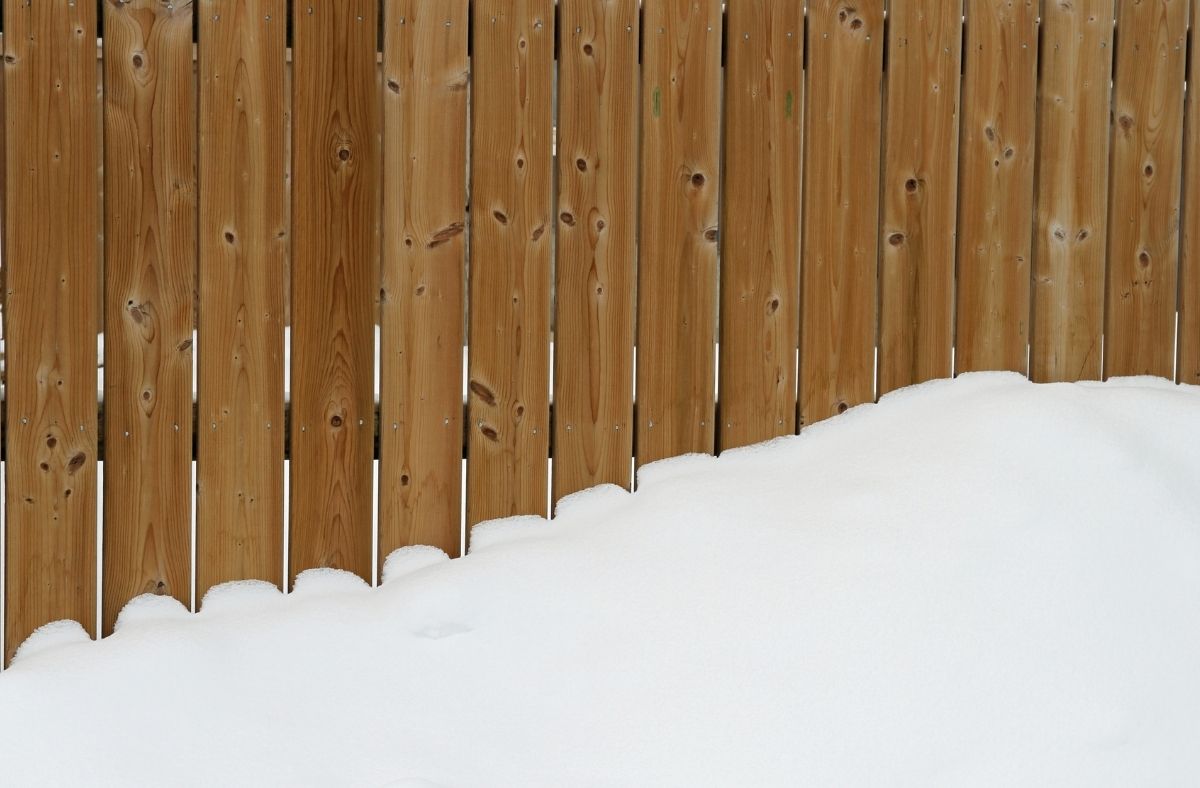
Harsh winter weather like snow, ice, and freezing temperatures take a toll on your fence and deck. As the weather quickly cools, there are important things you can do to protect your fence from the elements. Continue reading to learn how to prepare your fence this winter to keep your investment worthwhile.
How winter weather damages your fence
Freeze & Thaw Cycles
The biggest factor of winter damage is the constant freeze and thaw cycle. During warmer parts of the day, melting snow enters small gaps in your fence. When the temperature drops at night, that water freezes and expands, slowly widening those gaps. Over time, this can weaken the structure, loosen fasteners, and cause boards to split. While the damage doesn’t always appear immediately, the future impact can be significant by the time spring arrives.
Don’t let it pile up!
Snow and ice buildup will be inevitable during a long winter, but letting it accumulate too frequently can damage your fence. Thick layers of snow or ice add weight that most fences cannot support. The weight can cause the fence to begin to sag or even break. Clearing away heavy snow when safe to do so, especially around gates, can help prevent structural issues later.
Moisture and Rot
If you have a wood fence, moisture and rot is a major concern. After exposure to snow, rain, and ice, it can lead to excessive moisture leading to rot. Once rot begins, it can spread quickly damaging the fence. Regular sealing, staining, or painting is essential to keeping wood fences strong throughout winter.
Best Fencing Material for Cold climates
Vinyl vs. Composite
When it comes to composite or vinyl for winter weather, composite is more suitable for extreme cold. Although vinyl is moisture resistant, it can become very brittle in cold conditions. Composite fencing is much stronger than a regular vinyl fence due to material thickness and strength.
Aluminum
Aluminum fencing is a very sturdy option for winter weather. If you receive lots of snow fall each year, then an Aluminum fence is a great choice for durability and longevity. Aluminum fences can withstand heavy snowfall without warping, rotting or corroding easily in cold environments.
Pressure-treated Wood
Although wood is not the best material for harsh winter weather, pressure-treated wood is significantly more resistant to decay, rot, and insect damage. This is because the lumber is infused with preservatives under high pressure, allowing it to withstand moisture and freezing temperatures better than untreated wood.
Need a new fence?
Many homeowners believe that fence installation has to wait until spring, but that’s simply not true. In fact, winter can be one of the best times to install a new fence. Professional installation techniques allow experts to dig post holes and set concrete even in cold temperatures.
The idea that frozen ground makes fence work impossible is outdated. Experienced installers know how to handle winter soil conditions, and pressure-treated materials are built to withstand cold weather during and after installation.
Not only is winter fencing possible, but it often comes with shorter wait times, faster scheduling, and the ability to have your new fence ready before the busy spring rush. Call Excel Fencing and Decking today at (410) 803-9499.